ALLEGED CHRISTIAN GENOCIDE: U.S. Congress Move Threatens Nigeria’s Health, Food Security, Jobs


…Education, security programmes also under threat after over $3 billion in U.S. aid
…Experts warn: “This is a diplomatic red alert”
…HIV, tuberculosis and malaria interventions may suffer setbacks
By Frontline Reporters
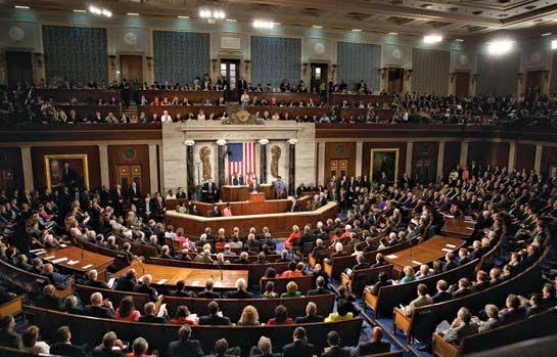
Nigeria may be heading toward one of its most significant humanitarian and development challenges in recent history following a decision by the United States House of Representatives to approve an amendment seeking to suspend all American assistance to the country over allegations of persistent killings of Christians and worsening insecurity.
Although the proposal has not yet become law, public health experts and development stakeholders have warned that if it secures approval from the U.S. Senate and is eventually signed by President Donald Trump, the consequences could be far-reaching—crippling critical healthcare programmes, threatening thousands of jobs, disrupting humanitarian interventions and reversing decades of progress in the fight against HIV/AIDS, tuberculosis, malaria and maternal mortality.
The experts described the development as a sobering reminder that Nigeria’s heavy reliance on foreign aid has become a major national vulnerability.
The amendment, sponsored by Congressman Gregory Steube, was adopted during deliberations on the Fiscal Year 2027 U.S. State Department Appropriations Bill.
Following the vote, Steube declared: “American taxpayers should never bankroll governments that turn a blind eye while Christians are abducted, tortured and murdered.”
The legislation elevates an earlier proposal to withhold 50 per cent of U.S. assistance to a total suspension until the U.S. Secretary of State certifies that Nigeria has taken measurable steps to curb violence and prosecute perpetrators.
However, the measure must still pass through the Senate and receive presidential assent before it can take effect.
For more than two decades, Nigeria has remained one of the largest recipients of American foreign assistance.
Records show that the United States provided approximately $1.16 billion in assistance in 2022, about $1.02 billion in 2023, and an estimated $767 million in 2024, with substantial funding channelled through USAID, PEPFAR and other development agencies.
Over the years, Washington has reportedly invested more than $6 billion in Nigeria’s HIV response through the President’s Emergency Plan for AIDS Relief (PEPFAR), supporting treatment for over 1.5 million Nigerians, including more than one million women and children.
According to the U.S. Mission in Nigeria’s 2024 report, American assistance has also delivered malaria medicines to 2.2 million children, supported HPV vaccinations for 13 million girls, screened nearly 20 million Nigerians for tuberculosis, strengthened disease surveillance for cholera and Lassa fever, and financed programmes in agriculture, education, water and sanitation, security reforms and private sector development.
Diplomatic Warning
Nigeria has consistently ranked among the top beneficiaries of U.S. foreign assistance. Findings reviewed by Frontline Reporters indicate that in 2024 alone, approximately $370 million was allocated to health interventions, $310 million to humanitarian assistance and $35 million to administrative support. Education programmes received $24 million, while agriculture attracted $7.8 million.
The 2024 report of the U.S. Diplomatic Mission in Nigeria further underscored the breadth of American support across critical sectors.
In healthcare, the U.S. supported the vaccination of 13 million girls aged nine to 14 against the Human Papillomavirus (HPV), while HIV and tuberculosis programmes provided services to 1.57 million Nigerians and screened 19.8 million citizens for tuberculosis. It also trained 55 public health emergency managers to respond to outbreaks of cholera and Lassa fever.
Economically, the U.S., through Prosper Africa, facilitated seven investment deals worth $1.5 billion, boosting employment and private sector growth. American assistance also enabled Nigerian students to access scholarships worth $30 million, while over 3.6 million teaching and learning materials were distributed nationwide.
On the security front, Washington provided $40 million in military assistance in 2024 and sponsored the training of 60 Nigerian military personnel in the United States. In partnership with the Institute for Peace and Conflict Resolution, it also deployed early-warning software to detect and address emerging conflicts.
Additionally, more than $50 million was committed to criminal justice and civilian security reforms, helping to expand legal aid services to over 5,000 Nigerians, while farmers benefited from over $55 million in agriculture-related financing.
‘A Serious Diplomatic Red Alert’
Reacting to the development, Chairman of the Public Health Sustainable Advocacy Initiative (PHSAI), Barrister Ayo Adebusoye, cautioned the Federal Government against treating the House vote with levity.
“Nigeria should see this as a serious diplomatic warning, not merely an aid issue. The concerns extend beyond funding; they touch on insecurity, accountability and the protection of human lives.”
He stressed that while the amendment is yet to become law, the government must regard it as a wake-up call.
“Whether one agrees completely with the allegations or not, Nigeria cannot ignore the reality that insecurity has become a major governance challenge attracting global attention.”
Adebusoye urged Nigerians not to reduce the issue to a religious debate.
“The victims include Christians, Muslims, farmers, humanitarian workers and ordinary citizens. Government’s response must focus on protecting every Nigerian and ensuring perpetrators are brought to justice.”
He warned that the health sector could bear the brunt of any prolonged aid suspension.
“Our HIV/AIDS, tuberculosis, malaria, immunisation, maternal and child health, nutrition and disease surveillance programmes depend substantially on U.S. support. Any disruption could affect medicines, diagnostics, vaccines and other essential health commodities.”
According to him, the unfolding situation exposes one of Nigeria’s longstanding structural weaknesses.
“A resilient nation should never have its essential public services almost entirely dependent on foreign donors. This should serve as a wake-up call not only for Nigeria but for Africa as a whole.”
Calling for urgent reforms, Adebusoye said profitable sectors of the economy must contribute more significantly to national development.
“Banks, telecommunications companies and other profitable sectors are generating trillions of naira. Nigeria must develop innovative domestic financing mechanisms for healthcare instead of relying almost entirely on USAID and other foreign governments.”
He further urged Abuja to intensify diplomatic engagement with Washington and demonstrate measurable improvements in security.
“Development is no longer simply an aid issue. It is now about governance, national resilience and public trust. Any nation whose essential services depend excessively on foreign assistance will remain vulnerable to geopolitical decisions.”
Recalling Nigeria’s post-independence years, he noted that the country was once a donor nation.
“In the 1960s and 1970s, Nigeria supported several countries across Africa and the Caribbean and even contributed to international institutions. We must rebuild that capacity by strengthening governance, protecting all citizens without discrimination and investing in domestic assets for health and development.”
‘Double Jeopardy for Nigerians’
Also speaking with Frontline Reporters, National President of the Association of Medical Laboratory Scientists of Nigeria, Dr. Casmir Ifeanyi, described the proposed suspension as “double jeopardy” for ordinary Nigerians.
According to him, citizens are already suffering from worsening insecurity and now face the prospect of losing life-saving international support.
“The killings across Nigeria have become a matter of international concern. The United States is justified in drawing attention to them. But withdrawing aid is like killing an ant with a sledgehammer.”
Speaking emotionally, Ifeanyi revealed that insecurity has devastated his own community.
“More than 11 communities around my hometown have been taken over by bandits. From the Benue axis through parts of Enugu State into Amufu, these areas have become safe havens for kidnappers and killer herders.”
He disclosed that the violence has personally affected his family.
“I am speaking as someone impacted from both sides. Insecurity has displaced my people and claimed members of my family, including my mother. At the same time, the country that has supported Nigeria’s healthcare and humanitarian programmes is threatening to withdraw that support. It is truly double jeopardy for Nigerians.”
Ifeanyi estimated that more than 70 per cent of international health assistance to Nigeria originates from the United States.
“If America withdraws completely, the impact will be incalculable—not only on healthcare, but also on humanitarian interventions, civil society, economic development and social welfare.”
He warned that HIV/AIDS treatment, tuberculosis control, malaria prevention, maternal and child healthcare, immunisation, reproductive health and cancer interventions would all come under severe pressure.
“The people who will pay the highest price are poor women, children and vulnerable Nigerians—not those responsible for governance failures.”
Drawing lessons from America’s reduction in funding to the World Health Organisation, Ifeanyi said Nigeria must urgently reduce its dependence on external assistance.
“Nigeria is one of the richest nations in terms of natural resources. Our challenge is not the absence of wealth but corruption and poor governance. If we secure our people, fight corruption and invest our resources wisely, we will no longer be at the mercy of foreign political decisions.”
He maintained that while the international community has every right to express concern over insecurity, abandoning Nigeria would disproportionately hurt innocent citizens.
“The United States is right to be concerned about the killings. But suspending assistance would punish poor women, children and vulnerable Nigerians who depend on HIV treatment, malaria control, immunisation and maternal healthcare services.”
He added that the international community should continue supporting efforts to combat insecurity while encouraging Nigeria to fulfil its constitutional responsibility of protecting lives and property.
As debate over the proposed legislation continues in Washington, analysts say the House vote—though not yet final—should serve as a wake-up call for Nigeria to strengthen domestic funding for healthcare and development while urgently addressing the insecurity that has drawn increasing international scrutiny.
For many observers, the message from Washington is clear: national security, governance and economic self-reliance are no longer separate conversations—they are now inseparable pillars of Nigeria’s future.
ADVERTISEMENTS