ABUJA UNDER SIEGE: Fake Presidential Council, Forged Documents and a Multi-Billion Naira Scandal

***Reps summon Adeyemi, order IGP to produce him tomorrow
By Frontline Reporters
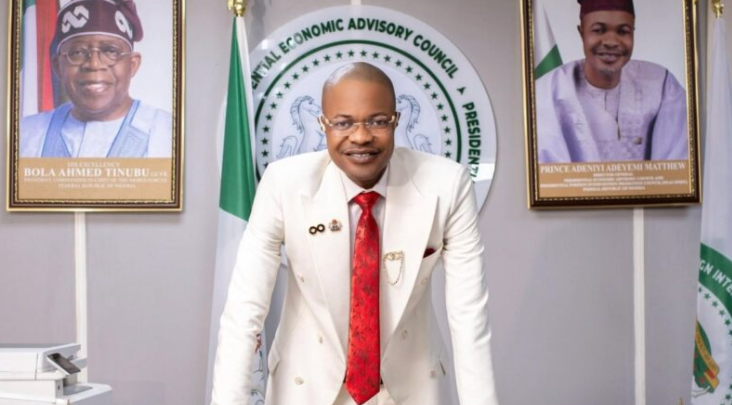
ABUJA—A dramatic twist emerged yesterday in the House of Representatives’ probe into the controversial Presidential Foreign Investment Promotion Council (PFIPC), as lawmakers ordered the Inspector-General of Police, Kayode Egbetokun, to produce the alleged mastermind, Mr. Adeniyi Matthew Adeyemi, before the committee by noon tomorrow.
The development came amid startling revelations from the Accountant-General of the Federation, Mr. Shamseldeen Ogunjimi, who disclosed that a forged State House letter was allegedly used to secure official government recognition for the body, also known as the Presidential Economic Advisory Council (PEAC).
The House Committee, chaired by Hon. Yusuf Gagdi, issued the directive after the Nigeria Police Force confirmed that Adeyemi is under investigation over allegations of fraud, conspiracy and impersonation. According to the Police, petitions from the Office of the Chief of Staff to the President accused him of falsely presenting himself as Director-General of both the Presidential Economic Advisory Council and the Presidential Foreign Investment Promotion Council.
Declaring that the suspect’s appearance had become imperative, Gagdi said the integrity of government institutions and public officials was at stake.
“People’s names are involved. People’s integrity are involved. Institutional names are involved. Institutional integrity is involved. It is not an option now,” the lawmaker stated.
He subsequently directed the committee clerk to formally notify the Inspector-General of Police to ensure Adeyemi’s appearance before the panel.
Representing the IGP, Assistant Commissioner of Police Basir Abdullahi informed lawmakers that the Police had already filed an eight-count charge against the suspect before the Federal High Court, adding that the matter remains before the court.
“The Nigerian Police Force investigated part of this case late last year and filed eight-count charges before a Federal High Court. The case is ongoing,” Abdullahi said, cautioning against disclosures that could prejudice judicial proceedings.
Investigators told the committee that petitions received from the Presidency alleged that Adeyemi used the purported office to obtain accommodation at the Federal Secretariat, sought approval to recruit nearly 300 staff, attempted to insert about $1.3 billion into the proposed 2026 Appropriation Bill, and planned a World Investment Summit under the platform of the alleged council.
In one of the hearing’s most dramatic moments, lawmakers compared signatures on documents purportedly issued by the Office of the Chief of Staff to the President with authentic records obtained by investigators. Asked whether the signatures matched, the Police witness responded bluntly:
“They are not the same.”
The revelation heightened fears that official State House documents may have been forged in what lawmakers described as an elaborate scheme to establish a fictitious government agency.
Hon. Gagdi further disclosed that investigators have uncovered no fewer than 29 allegedly forged documents, including purported approvals from the State House, the Office of the Secretary to the Government of the Federation, the Office of the Head of the Civil Service of the Federation, the Ministry of Finance and several other federal institutions.
According to him, many of the affected agencies have already appeared before the committee to disown the documents attributed to them.
Providing further insight into how PFIPC gained apparent legitimacy, Accountant-General Ogunjimi told lawmakers that his office first received correspondence on November 7, 2024, requesting the creation of an administrative code for the Presidential Economic Advisory Council for budgeting, accounting and reporting purposes.
Believing the letter originated from the State House, the Office of the Accountant-General processed the request in line with established procedures and communicated its approval accordingly.
However, Ogunjimi dropped a bombshell before the committee:
“The letter that was received by the Treasury was respectfully addressed as coming from the State House. That letter was never issued by the State House.”
He emphasized that although the purported council later requested staff deployment, Treasury Single Account (TSA) facilities, domiciliary accounts and an establishment grant of N27.4 billion, no government funds were ever released to the organization.
“It is important to note that no funds were released under salaries, overhead, capital, or any form of intervention or special allocation to the council,” the Accountant-General affirmed.
He further disclosed that while the Central Bank of Nigeria opened two domiciliary accounts for inflow purposes, they never became operational because the council failed to satisfy regulatory requirements.
Lawmakers also queried how two Treasury staff members originally posted to the Office of the Chief Economic Adviser to the President remained attached to the purported council without the knowledge of the Office of the Accountant-General.
Ogunjimi explained that his office was never informed that the officials had been absorbed into another entity, insisting that records still reflected them as staff of the Office of the Chief Economic Adviser.
The House investigation is examining allegations that forged presidential approvals, fake State House correspondence and other falsified government documents were used to create and operate the purported Presidential Economic Advisory Council.
With the committee now demanding Adeyemi’s appearance, the unfolding scandal is shaping up to be one of the most significant cases of alleged document forgery and institutional impersonation in recent times, with far-reaching implications for Nigeria’s public service and national security architecture
ADVERTISEMENTS