2027 SHOWDOWN: Opposition Loads Political Cannon, But Atiku, Obi, Makinde Stay Away!


G100, Six Parties, Reps Minority Caucus Plot Grand Alliance • Single-Term Presidency Proposed • Common Candidate Looms • “We’ll Take Government Out”
BY FRONTLINE REPORTERS
The battle for Nigeria’s political soul in 2027 may have entered a new and potentially explosive phase, as opposition parties, the G100 and the Minority Caucus of the House of Representatives converged in Abuja on Monday to begin laying the foundation for a formidable electoral alliance against the ruling establishment.
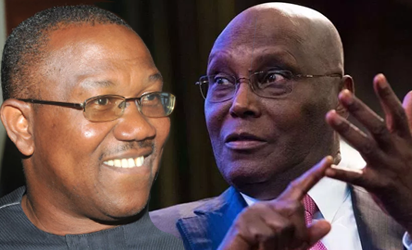
But just as the opposition sought to demonstrate a united front, three of the biggest names associated with the emerging anti-government camp—former Vice President Atiku Abubakar, Labour Party presidential candidate Peter Obi and Oyo State Governor Seyi Makinde—were conspicuously absent from the high-powered meeting.
The absence of the three political heavyweights immediately raised questions about the depth of the proposed coalition and whether the opposition can genuinely overcome the personal ambitions, competing interests and leadership rivalries that have historically frustrated attempts to forge a common front.
Held at the Shehu Musa Yar’Adua Centre, Abuja, the summit brought together representatives of six opposition parties, presidential and vice-presidential candidates, party chairmen, members of Boards of Trustees and the House of Representatives Minority Caucus. The meeting was convened to chart a common political strategy ahead of the 2027 general election.
Among those present were SDP presidential candidate Prince Adewole Adebayo, PRP presidential candidate Donald Duke and APM vice-presidential candidate Lawal Musa Daura. The gathering, however, stopped short of demanding the immediate withdrawal of candidates or dissolution of any political party.
THE BIG GAMBLE: ONE TERM TO UNITE THE OPPOSITION
In what could become one of the most contentious proposals in the opposition’s 2027 strategy, the G100 called for a Government of National Competence based on a single four-year transition term.
Presenting the proposal, Mallam Salihu Moh. Lukman warned that the opposition could not afford another cycle of vague agreements and unenforceable political promises.
He insisted that any agreement must be contained in an enforceable Transition Charter, arguing that political commitments without consequences had repeatedly collapsed whenever individual interests changed.
“The Framework before you proposes something more demanding than a merger of ambitions,” Lukman said, describing the proposed arrangement as a government built around competence, integrity, national inclusion and equitable representation.
The message was unmistakable: the opposition wants the rules agreed before the struggle for power begins.

2023: THE WOUNDS ARE STILL OPEN
The summit repeatedly returned to the lessons of the 2023 presidential election, which opposition leaders described as a costly demonstration of the consequences of political fragmentation.
Lukman argued that the combined strength of opposition candidates could have dramatically altered the electoral arithmetic had their votes not been split.
“Nobody stole thirteen million votes. We divided them ourselves, in public,” he declared.
For the opposition, that arithmetic has become a political warning: divide the votes again in 2027 and the consequences could be the same—or worse.
Lukman pointed to Kenya and Malaysia, where opposition forces successfully displaced long-ruling political establishments after overcoming divisions and presenting a united front.
His conclusion was blunt: electoral victory, he argued, was not necessarily about which opposition party was morally superior, but about whether the opposition could finally become politically organised enough to act as one.
“WE’LL TAKE THIS GOVERNMENT OUT”
The House of Representatives Minority Caucus has now thrown its weight behind the coalition-building project.
Minority Leader Hon. Fred Agbedi told the gathering that the caucus had resolved to partner with the G100 to bring opposition parties together, streamline their ambitions and pursue a collective victory in 2027.
His words injected an unmistakably combative tone into the summit.
“In the spirit of creating a viable opposition and ensuring that we win collectively the 2027 election, the Minority Caucus of the House of Reps decided that we partner with the G100 to see how opposition parties can come together, streamline our ambitions, and ensure that we take this government out,” Agbedi said.
He warned that personal ambitions could once again become the Achilles’ heel of the opposition.
The implication was stark: if the opposition cannot agree on who should lead, it may once again hand victory to the ruling party without a united electoral fight.
DUKE DROPS HIS AMBITION
PRP presidential candidate Donald Duke delivered one of the summit’s strongest messages, declaring his willingness to abandon his personal presidential ambition if the opposition eventually agrees on another candidate.
According to Duke, political ego remains one of the biggest obstacles confronting opposition forces.
“If we think we can go it all alone, then we will fail,” he warned.
His position could place fresh pressure on other presidential aspirants to demonstrate a similar willingness to make concessions if a credible coalition begins to take shape.
But that may be easier said than done.
The real test of the opposition project will come when the negotiations move from broad principles to the much more difficult questions of who gets the presidential ticket, who controls the structure, how offices are shared and whose political machinery carries the coalition into the election.
PARTY CHAIRMEN SOUND THE ALARM
Representatives of the participating parties used the summit to acknowledge the enormous political challenges ahead.
ADC National Vice Chairman for the South-South, Usani Uguru Usani, warned opposition politicians against turning their weapons on one another.
He said the opposition was spending too much energy attacking itself instead of confronting the political forces it seeks to dislodge.
APM National Chairman Yusuf Mamman Dantalle described the gathering as a historic opportunity, urging politicians to sacrifice individual and party interests for the larger national project.
Representing the Tanimu Turaki-led PDP faction, BoT Secretary Dr Babangida Aliyu blamed personal ambition and pecuniary interests for many of Nigeria’s political and governance problems, while calling for the coalition strategy to be replicated at state and local government levels.
PRP National Chairman Dr Hakeem Baba-Ahmed described the situation confronting the opposition parties as an “existential threat,” warning that Nigerians were watching closely to see whether politicians could rise above their differences.
SDP National Chairman Prof. Sadiq Gombe and NDC National Chairman Senator Moses Cleopas Zuwoghe also pledged support for the coalition initiative.
THE BLUEPRINT: FIVE GROUPS, ONE DESTINATION
The summit approved an elaborate structure for taking the coalition project forward.
Three committees are to drive the process: a Central Leadership Committee, a Publicity and Communication Committee, and a Legal Committee.
Five additional working groups will prepare detailed proposals within four weeks covering a National Covenant for Democratic Renewal, a Single-Term Transition Charter, a National Reform Programme, a Framework for Opposition Unity and a Roadmap to a Common Presidential Candidate.
Their reports are expected to form the basis of discussions at a second opposition summit.
But the G100 was careful to stress that the process is not yet about choosing a candidate.
Lukman said the summit was not asking any party to dissolve, merge or withdraw its candidate.
The immediate task, he said, was to build the negotiating table before deciding who would occupy the seats around it.
THE ATIKU-OBI-MAKINDE QUESTION
Yet, hanging over the entire Abuja gathering was the absence of Atiku, Obi and Makinde.
Their non-appearance may prove to be one of the most important political questions arising from the summit.
The three men command significant political followings and represent different power blocs within Nigeria’s opposition landscape. Their eventual position could therefore determine whether the emerging coalition becomes a genuine national force or remains another gathering of opposition parties struggling to reconcile competing ambitions.
For now, the coalition builders have created the framework.
They have established committees. They have proposed a single-term transition. They have acknowledged the mistakes of 2023. They have begun discussing a common presidential candidate.
But the hardest battle may still lie ahead.
Can the opposition put aside ego, ambition and rivalry long enough to produce one formidable political machine in 2027?
That is the question that could determine whether Monday’s Abuja summit becomes the beginning of a political earthquake—or another grand opposition gathering that ends in promises without power.
COMMUNIQUÉ: OPPOSITION TIGHTENS THE NET
At the close of the summit, the six participating parties adopted a Joint Communiqué committing themselves to structured negotiations towards opposition cooperation ahead of the 2027 elections.
They formally established the three proposed committees and approved the five working groups, which are expected to submit their reports within four weeks.
The communiqué also called on the United States Government to ensure the lawful and timely disclosure of non-exempt official records concerning President Bola Ahmed Tinubu that are relevant to legitimate public interest, while acknowledging that an ongoing Freedom of Information Act case exists before the United States District Court for the District of Columbia.
The parties further resolved to communicate their position to the ECOWAS Commission and reaffirmed that the G100 would remain only a facilitator and observer, with political authority resting with the participating parties.
The machinery has been switched on. The negotiations have begun. The political stakes are rising.
And with 2027 drawing closer, the opposition now faces its biggest test: unite before the battle—or once again divide and watch another opportunity slip away.
ADVERTISEMENTS