Fake agency scandal: Tinubu orders 30-day ICPC probe, Senate rejects blame

Fake agency scandal: Tinubu orders 30-day ICPC probe, Senate rejects blame

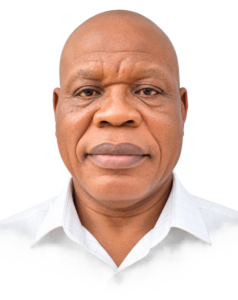
President Bola Tinubu. Photo: State House
Fake Agency Scandal: Tinubu Orders 30-Day ICPC Probe as Senate Rejects Blame
…President directs comprehensive investigation into PFIPC saga
…Senate insists budget line was not inserted by lawmakers
By Frontline Reporters
President Bola Tinubu has ordered the Independent Corrupt Practices and Other Related Offences Commission (ICPC) to conduct a comprehensive investigation into the activities of the controversial Presidential Foreign Intervention Promotion Council (PFIPC), describing the body as a fictitious organisation with no legal backing. The President directed the anti-graft agency to conclude its investigation and submit a detailed report within 30 days.
The directive was conveyed on Tuesday in a statement issued by the President’s Special Adviser on Information and Strategy, Bayo Onanuga, titled “President Tinubu Orders ICPC to Investigate Presidential Foreign Intervention Promotion Council.”
According to the Presidency, the investigation became necessary following the discovery that the so-called PFIPC was never created by the Federal Government and has no foundation in any law, presidential directive, executive approval or any other legitimate government instrument.
Tinubu specifically mandated the ICPC to investigate the alleged forgery of appointment letters and official government documents reportedly used by one Adeniyi Adeyemi Mathew, who presented himself as the Director-General of the council and falsely claimed to have been appointed by the President.
The President also directed investigators to examine allegations that Adeyemi used the purported presidential appointment to obtain official recognition, diplomatic support and visa facilitation, as well as the opening of multiple bank accounts in the names of government agencies using allegedly forged documents.
In addition, the anti-corruption agency is to investigate the broader circumstances that enabled the non-existent agency to operate with apparent official legitimacy. The probe will cover the origin and use of forged government documents, the processes through which diplomatic recognition may have been sought, the operation of related bank accounts, the movement of funds, and the involvement of any public officials, private individuals, financial institutions or intermediaries who may have facilitated the alleged fraud.
President Tinubu further instructed the ICPC to identify loopholes within government institutions that were exploited and recommend immediate reforms to prevent similar occurrences. He also directed all Ministries, Departments and Agencies (MDAs) to cooperate fully with investigators by providing all relevant records and information required for the speedy completion of the assignment.
“The integrity of the Presidency and the institutions of the Federal Government must be protected against impersonation, forgery, abuse of official identity and the exploitation of weaknesses in the public service. All persons found culpable must face the full weight of the law,” the President declared.
The directive follows sustained public outcry from civil society organisations, opposition figures and senior legal practitioners over how the controversial council allegedly operated from the Federal Secretariat, maintained bank accounts with the Central Bank of Nigeria, secured a ₦1.3 billion allocation in the 2026 Appropriation Act and interacted with diplomatic missions despite lacking any legal status.
Human rights lawyer, Femi Falana, counsel to Adeyemi, had earlier questioned how the council found its way into the national budget if the appointment letter was indeed forged. He also called for a full-scale investigation involving both Adeyemi and the President’s Chief of Staff, Femi Gbajabiamila.
However, the Presidency distanced the Chief of Staff from the controversy, insisting that forensic analysis conducted by the Nigeria Police established that the signature on the disputed appointment letter was forged.
Speaking with Frontline Reporters, Onanuga disclosed that the police carried out forensic examinations before filing charges against Adeyemi.
“The police investigated the matter thoroughly. They subjected the Chief of Staff’s signature to forensic examination and confirmed it was forged. All the documents the suspect presented were found to be fake before the case was filed in court,” Onanuga stated.
Meanwhile, the Nigeria Police Force has released Adeyemi’s father after several hours of interrogation over his son’s whereabouts.
A neighbour, who spoke anonymously, disclosed that the elderly man was questioned extensively before being allowed to return home.
“He has been released. The police questioned him about his son’s whereabouts and also extracted the contacts stored on his phone. We do not know why,” the source said.
The arrest of Adeyemi’s father on Monday had generated criticism from Falana, who described the action as unlawful and an attempt to intimidate members of his client’s family. According to the senior lawyer, Adeyemi has consistently appeared before the court and remains committed to defending himself. He maintained that his client would attend the next hearing fixed for July 27 and argued that arresting relatives of suspects has no place in lawful criminal investigations.
Police investigations into the matter reportedly began in October 2025 over allegations of forgery, impersonation and the use of fraudulent government documents linked to the PFIPC. Investigators alleged that official letterheads bearing the council’s insignia were used to communicate with government agencies, while invitations were purportedly issued in the council’s name by the House of Representatives. The police have since filed criminal charges against Adeyemi.
Senate Washes Its Hands of Controversy
The Senate on Tuesday distanced itself from the controversy, insisting that it has no legal basis to investigate the matter because no petition has been submitted to the National Assembly and the case is already before the court.
Chairman of the Senate Committee on Media and Publicity, Yemi Adaramodu, acknowledged that the PFIPC received a budgetary allocation in the 2026 Appropriation Act but insisted that lawmakers neither created the agency nor inserted the controversial budget provision.
According to him, the dispute remains an executive matter involving the Office of the Chief of Staff and the individual claiming to be the Director-General of the council.
“The budget line in question was not created or inserted by the National Assembly. It is also not the responsibility of the Senate or House of Representatives to verify the authenticity of appointments made into Ministries, Departments and Agencies.
“If the alleged Director-General had been one of those whose appointment required Senate confirmation, then perhaps there would have been some connection. However, should any concerned Nigerian or any of the parties submit a formal petition, the Senate will consider it through the appropriate legislative processes,” Adaramodu said.
The Senate’s position comes amid mounting criticism over the ₦1.3 billion allocation to the controversial council, despite repeated denials by the Presidency that the agency ever existed.
Earlier reports by Frontline Reporters had revealed that the allocation was approved even though neither Adeyemi nor any representative of the PFIPC appeared before the Senate Committee on Establishment and Public Service to defend the budget proposal.
The newspaper also reported that procedural lapses involving the Office of the Head of the Civil Service of the Federation, the Budget Office and the National Assembly allegedly created opportunities for the forged appointment documents to gain official traction. It further reported that the Office of the Secretary to the Government of the Federation had processed correspondence from the PFIPC months before the Presidency publicly disowned the organisation.
Adeyemi, who continues to claim he is the Director-General of the council, is currently standing trial before the Federal High Court in Abuja on an eight-count charge bordering on conspiracy, forgery and impersonation. The Federal Government has listed Chief of Staff Femi Gbajabiamila and 10 others as prosecution witnesses in the ongoing trial.
ADVERTISEMENTS











2026-06-27