Senate Leader: State Police Must Enjoy Financial Autonomy to Prevent Governors’ Interference


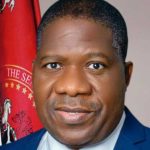
Bamidele
BY FRONTLINE REPORTERS
Senate Leader: State Police Must Enjoy Financial Autonomy to Prevent Governors’ Interference
The Leader of the Senate, Senator Opeyemi Bamidele, has said that any constitutional amendment establishing state police must guarantee its funding as a first-line charge to shield it from political interference by state governors and other vested interests.
Speaking on the proposed creation of state police, Bamidele warned that without constitutionally guaranteed funding, the new policing structure could easily be manipulated not only by governors but also by influential business interests, criminal networks, and political cabals.
According to him, one of the major fears Nigerians have expressed about state police stems from the country’s First Republic experience when regional police forces were allegedly used for political purposes. He noted that such concerns are legitimate and must be addressed through strong constitutional safeguards.
He explained that the National Assembly is considering provisions that would guarantee the institutional and financial independence of state police services. Central to the proposal is making the funding of state police a first-line charge on state revenues, similar to the constitutional financial autonomy currently enjoyed by the judiciary.
Bamidele said a state Commissioner of Police should not be subjected to the whims and caprices of any governor. He argued that governors should not have the power to withhold funding simply because the police refuse to carry out politically motivated directives.
He proposed that a specific percentage of every state’s budget should be constitutionally earmarked for the operations of its police service, with clear guidelines on how such funds can be accessed and utilised.
The Senate Leader further cautioned that poorly funded state police formations could become vulnerable to external influences, stressing that “he who pays the piper dictates the tune.” He warned that business interests, criminal elements and powerful cabals could exploit financially weak police institutions for their own purposes.
Bamidele maintained that the constitutional review process would ensure that state police remain professional, accountable and independent while strengthening internal security across the federation.
Meanwhile, Speaker of the House of Representatives, Tajudeen Abbas, said the issue of funding must be conclusively addressed before state police become operational.
Speaking at the National Security Roundtable during the National Assembly Open Week 2026 in Abuja, Abbas advocated a gradual and carefully planned implementation process.
He recommended that Nigeria should first enact a National Minimum Standards Act to establish uniform policing standards before any state begins operating its police service. He also suggested that states should adopt the system progressively rather than launching police forces simultaneously across the country.
Abbas stressed that funding mechanisms—whether through dedicated policing funds, federal support tied to standards, or shared services—must be clearly defined to avoid situations where states establish police forces they cannot adequately finance.
The Speaker commended President Bola Tinubu for taking the bold step of forwarding an Executive Bill on state police to the National Assembly, describing it as a major constitutional reform that previous administrations had been reluctant to pursue.
He further highlighted several safeguards contained in the proposed framework, including the requirement that state Commissioners of Police be appointed on the recommendation of the National Police Council and confirmed by state assemblies. Removal of such officers, he said, would require a two-thirds majority of the state legislature and can only be done for valid reasons.
Abbas added that the proposed constitutional amendment also empowers the federal police to intervene temporarily where a state police service collapses or is hijacked, subject to strict constitutional conditions, legislative oversight and judicial review.
Drawing lessons from policing models in Germany, Canada and the United States, Abbas emphasised that decentralised policing can only succeed when backed by national standards, effective intelligence-sharing mechanisms and robust accountability structures.
Both National Assembly leaders agreed that while state police have become necessary given Nigeria’s growing security challenges, their success will depend largely on constitutional safeguards, financial autonomy and transparent operational standards.
ADVERTISEMENTS